


ICMM is committed to strengthening health and safety performance to reduce operational fatalities to zero. As part of this commitment, ICMM produces an annual safety data report.
Safety Performance: Benchmarking progress of ICMM company members in 2024
10 July 2025
Since 2012, ICMM has disclosed the safety performance of its members as part of a benchmarking report that aims to transparently track progress towards the goal of eliminating fatalities and serious injuries. This report details the performance of our member companies in 2024. The data is presented in line with the definitions set out in our Health and Safety Performance Indicators: Guidance, 2021.
As a commitment of membership, ICMM company members must report their safety performance in their annual sustainability reporting in line with country and listing regulations as well as Global Reporting Initiative (GRI) requirements. Comparing these data sets can be challenging due to differences in reporting criteria. In some cases, because of differences in jurisdictional or institutional reporting requirements, or ways in which injuries are recorded, datasets may not be directly comparable.
Nevertheless, by collating ICMM company member data within a specific calendar year and unifying it under a common set of indicators, it enables us to provide a thorough overview of members’ safety performance.
This safety data continues to play an important role in informing leadership decisions as well as the health and safety strategies of ICMM and its members. Ongoing analysis of incidents and their associated root causes will continue to inform innovative and impactful approaches to improving safety performance across the industry.
ICMM has compiled and published members’ safety performance data using fatality and total recordable injury (TRI) numbers and frequency rates as primary measures. However, we are developing additional metrics which will provide further insights into our members’ health and safety performance.
In 2021, ICMM’s guidance was updated to provide greater clarity on how companies determine if an incident is ‘recordable’. If there are any deviations from the ICMM guidance, then these are explained in the footnotes.
2024 Safety Data
This section provides an overview of ICMM members’ safety performance in relation to fatalities and injuries.
Fatalities
Hazard Classification
Forty-two (42) fatalities occurred across ICMM’s 24[1] member companies in 2024. This compares to 36 fatalities in 2023, 33 in 2022, and 45 in 2021 signaling a sustained upward trend over the past three years.
In 2024, there was a 23.3% increase in the number of incidents that resulted in a fatality (37 incidents in 2024 compared to 30 in 2023), despite the hours worked remaining largely unchanged. Three incidents resulted in more than one fatality, with the fatality frequency rate (FFR) increasing to 0.015 per million hours worked in 2024 from 0.013 in 2023.
Graph 1 and Table 1 highlight the fatalities and FFR data from 2012 to 2024. Nine of our 24 member companies (37.5%) reported no fatalities in 2024, compared to 12 out of 25 (48%) in 2023.

Table 1: ICMM Member Safety Performance Data (2012–2024)
|
Year
|
Total Recordable Fatalities
|
Fatality Frequency Rate (FFR)[4]
|
Total Recordable Injuries (TRI) | TRI Frequency Rate (TRIFR)[4] | Total Hours Worked (Employees + Contractors) |
| 2024 | 42 | 0.015 | 6,446 | 2.29 | 2,811,767,985 |
| 2023 | 36 | 0.013 | 7,278 | 2.59 | 2,810,923,982 |
| 2022 | 33 | 0.012 | 7,126 | 2.66 | 2,683,513,114 |
| 2021 | 45 | 0.018 | 7,355 | 2.90 | 2,538,696,213 |
| 2020 | 44 | 0.018 | 6,997 | 2.94 | 2,380,942,303 |
| 2019 | 287[5] | 0.118 | 7,780 | 3.20 | 2,430,830,685 |
| 2018 | 50 | 0.022 | 7,751 | 3.41 | 2,275,510,188 |
| 2017 | 50 | 0.026 | 7,515 | 3.94 | 1,906,708,433 |
| 2016 | 63 | 0.032 | 8,445 | 4.26 | 1,981,148,588 |
| 2015 | 60 | 0.027 | 10,494 | 4.70 | 2,231,437,832 |
| 2014 | 56 | 0.024 | 10,455 | 4.50 | 2,324,525,784 |
| 2013 | 91 | 0.035 | 11,636 | 4.52 | 2,571,500,557 |
| 2012 | 90 | 0.033 | 13,895 | 5.07 | 2,738,579,590 |
The data in Graph 2 breaks down the number of fatalities by cause (hazard) and location. ‘Mobile equipment’ – which refers to powered mine vehicles such as haul trucks, loaders, dozers and light-duty vehicles used for excavation, loading, hauling and transport of materials – was the leading hazard in 2024, accounting for 21% of total fatalities (2023: 10 of 36). Five of these fatalities occurred underground.
Seven of the nine ‘mobile equipment’ fatalities occurred at operations in Africa, while the remaining two incidents took place at surface mines in Brazil and the United States.

‘Fall of ground’ – the collapse of rock or earth from a roof, wall or face in an underground mine excavation – was the second highest cause of fatalities in 2024 (five). Four of these occurred in separate incidents at South African operations. This marks an increase compared to the two ‘fall of ground’ fatalities recorded in 2023 and one recorded in 2022.
Patterns in ‘fall of ground’ incidents
Reviews of the 2024 ‘fall of ground’ incident data point to two recurring triggers. Three of the five incidents involved work being carried out before full ‘mesh-and-bolt support’ (steel wire mesh secured to the rock face with bolts to hold loose ground or rocks in place) had been installed or after support had been damaged. The remaining two were associated with seismic bursts in deep, high-stress stopes soon after blasting. Both mechanisms triggering these incidents echo the pattern seen in earlier South African ‘fall of ground’ incidents by member companies of the Minerals Council South Africa[6], where inadequate or degraded ground support and rock instability in ultra-deep mines were identified as root causes.
Incidents of ‘falling objects’ – loose tools, equipment or rock dropped from height during maintenance, lifting or shaft work – caused four fatalities in 2024, compared
to zero in 2023. All were attributed to lapses in basic safety practices such as poor secondary-retention and ignoring no-go-zones. Poor secondary retention refers to a backup device or method that prevents an object from falling or detaching. No-go-zones refer to no go areas around a task or piece of equipment that presents a hazard.
Four workers were fatally injured in an aviation incident while travelling to a Rio Tinto mine in Canada[7]; the incident is classified under ‘other process’ locations.
Graph 3 presents fatality data by hazard classification, which demonstrates the most common type of incidents causing a fatality, and the trend over time.

The work location of fatalities reported in 2024 is represented in Graph 4.
In 2024, 43% of incidents occurred underground. This compares to an average of 48% of fatalities annually between 2020 and 2024. Mobile equipment interactions (33%) and ‘fall of ground’ events (31%) together made up nearly two-thirds of these underground fatalities.
An uptick in energy isolation breaches – failures to lock-out or tag-out (LOTO) machinery by physically disconnecting and securing all sources of hazardous energy (electrical, mechanical, hydraulic, pneumatic, gravitational, etc.) before maintenance or repair - underlines the need to reinforce LOTO discipline.
In 2024, fatalities occurring underground and in other process areas, such as milling and leaching plants, accounted for a combined 88% of all recorded fatalities. As shown in Graph 5, underground operations and other process areas consistently accounted for approximately 90% of all fatalities from 2020 to 2024, underscoring the importance of robust critical control management across both locations.

Addressing risks in underground mining
Fatalities occurring at underground operations remain persistently high. Underground mining operations present distinct hazards due to their confined spaces and complex work environments. Primary safety risks include mobile equipment interactions, rock falls (‘fall of ground’), energy isolation failures, and inadequate ground support in high-stress areas. These hazards can lead to serious injuries or fatalities if not managed effectively.
Implementing robust critical control measures, thorough safety training, consistent adherence to established protocols, and rigorous monitoring of operational environments, are therefore crucial to support worker safety and maintain safe underground mining operations.
In December 2024, ICMM members committed to implementing further measures to protect people working in underground mines against exposure to diesel particulate matter (DPM). Large mining trucks and equipment that transport hundreds of tonnes worth of ore across mine sites every day have traditionally been powered by diesel engines.
These engines generate emissions consisting of microscopic particles produced from the incomplete combustion of diesel fuel, including organic carbon, elemental carbon, ash, and can contain traces of heavy metals. In underground mines, where vehicles and equipment operate in confined spaces, DPM concentrations can increase significantly, exposing workers to serious health problems such as cancer and respiratory issues.
ICMM’s accompanying DPM Good Practice Guide provides a structured framework for companies to reduce and manage DPM exposure in underground mining operations.

Geography
The total recordable fatalities (TRF) and FFR by continent are shown in Graph 6 and drawn from the data in Table 2. In 2024, half of the fatalities (21 of 42) occurred in Africa, while 24% (10 of 42) of total fatalities occurred in South America.
Africa recorded the highest FFR at 0.031, North America followed at 0.029, and South America, despite representing 41% of the total hours worked, recorded a FFR of only 0.009. The global average FFR was 0.015 in 2024. As in the last three years, Europe reported no fatalities in 2024.
Geographic distribution of underground fatalities
In 2024, all 18 underground fatalities were confined to just two continents: Africa (15 fatalities: 14 of them in South Africa and 1 in the DRC) and South America (3 fatalities: 1 in Peru and 2 in Argentina). No underground fatalities were reported in Asia, Australia and Oceania, Europe or North America.
Did you know?
ICMM member association Minerals Council South Africa developed a focused programme on safety in underground gold and platinum mines in the country. The report[8] outlines continued efforts to enhance health and safety in South Africa’s mining sector, with a focus on reducing harm, advancing best practices, and fostering a culture of ongoing safety improvement. It serves as a resource for industry stakeholders, regulators, and policymakers alike.
Table 2: ICMM Member Fatalities per Continent (2024)
| Continent | Total Hours Worked (Employees + Contractors) |
% Total Hours Worked | Total Recordable Fatalities (TRI) | Fatality Frequency Rate (FFR) | % Fatalities |
| Africa | 684,133,621 | 24 | 21 | 0.031 | 50 |
| South America | 1,158,448,026 | 41 | 10 | 0.009 | 24 |
| North America | 240,565,550 | 9 | 7 | 0.029 | 17 |
| Asia | 126,959,947 | 5 | 1 | 0.008 | 2 |
| Australia & Oceania | 510,154,698 | 18 | 3 | 0.006 | 7 |
| Europe | 86,755,117 | 3 | 0 | 0.000 | 0 |
| Not defined[9] | 2,546,798 | 0 | 0 | 0.000 | 0 |
| Total | 2,811,767,985 | 100 | 42 | 0.015 | 100 |

The number of fatalities, the FFR and TRF among member companies by country is shown in Graph 7 and based on the data in Table 3. The greatest number of fatalities occurred in South Africa (15) which is more than the 13 fatalities recorded in 2023, and seven recorded in 2022. Of the 15 fatalities that occurred in South Africa, 14 occurred underground. Argentina and Tanzania, with two fatalities each, recorded the highest FFR at 0.075 and 0.054 respectively, though they only accounted for 2% of the total hours worked.
Table 3: ICMM Member Fatalities per Country (2024)
| Country | Total Hours Worked (Employees + Contractors) |
% of Total Recorded Hours Across Countries with Fatalities | Total Recordable Fatalities (TRF) | Fatality Frequency Rate (FFR) |
| South Africa | 398,912,586 | 15 | 15 | 0.038 |
| Brazil | 555,469,224 | 20 | 5 | 0.009 |
| Canada | 119,227,050 | 4 | 5 | 0.042 |
| Australia | 311,220,790 | 11 | 3 | 0.010 |
| Argentina | 26,649,065 | 1 | 2 | 0.075 |
| DRC | 72,305,101 | 3 | 2 | 0.028 |
| Tanzania | 37,000,501 | 1 | 2 | 0.054 |
| USA | 108,461,488 | 4 | 2 | 0.018 |
| Chile | 361,776,404 | 13 | 1 | 0.003 |
| Colombia | 41,172,599 | 1 | 1 | 0.024 |
| Ghana | 63,146,639 | 2 | 1 | 0.016 |
| Guinea | 38,691,786 | 1 | 1 | 0.026 |
| Kazakhstan | 57,354,308 | 2 | 1 | 0.017 |
| Peru | 146,496,448 | 5 | 1 | 0.007 |
| All other countries | 473,883,996 | 17 | 0 | 0.000 |
| Total | 2,811,767,985 | 100 | 42 | 0.015 |

Organisational factors
As in previous years, incidents in 2024 were widespread across work locations, companies, and countries. Despite ‘mobile equipment’ being identified as the most common hazard, review of the circumstances of each fatality shows little consistency in the events leading to the incidents. Overall, fatalities due to injuries from mobile equipment, ‘fall of ground’ or ‘falling objects’ resulted from workers being in hazardous zones.
Graph 8 provides further insight into the organisational factors associated with fatality incidents in 2024.

What is “safety culture”?
Safety culture refers to the shared values, behaviours and attitudes that shape how people approach safety, risk and compliance across an organisation. It influences how consistently procedures are followed; how openly concerns are raised; if there is a focus on strengthening psychological health and safety in the organisation; and, how leaders and teams respond to potential hazards.
Why does it matter?
In 2024, over a quarter of all fatality incidents (10 of 37) were attributed to the failure to follow established rules or procedures. However, only a single fatality was formally classified as involving “safety culture” as a contributing factor.
This disparity indicates that the cultural drivers behind risk-taking behaviour, non-compliance or lapses in operational discipline may often be under-recognised in incident investigations. Addressing these cultural blind spots – including workers’ psychological safety and the beliefs and norms that influence day-to-day decision-making – remains essential for sustaining improvements in fatality elimination and is a key area of focus for ICMM.
The total number of fatalities broken down by contractor and employee workers are shown in Graph 9 for each country. In 2024, contractor fatalities account for 45% of total fatalities (19), compared with 69% in 2023 (25). Although contractors accounted for 58% of the total hours worked, their FFR at 0.012 was lower than the FFR of 0.020 for employees.

The importance of effective critical control management
Critical controls, or barriers, are the actions taken to prevent hazards from developing into potentially dangerous events. Where critical controls are missing, i.e. where full risk assessments and mitigating management actions have not been completed, there is a greater likelihood that incidents will occur. Where controls were in place but not implemented, i.e. where standard procedures were not followed, incidents could also happen. Maintaining effective controls is a core activity in risk management processes.
Breakdowns in critical controls continue to cause fatal and catastrophic events. Because these events are mostly preventable, there is a pressing need to refocus attention on the systematic implementation, verification, and governance of critical controls. Strengthening critical controls is a foundational element in reducing serious incidents and fatalities.
A decade after the publication of ICMM’s original 2015 Critical Control Management: Good Practice Guide and Implementation Guide, it is still ICMM’s most-downloaded publication, reflecting its enduring significance and utility across the mining and metals industry. As operations evolve and new risks emerge, ensuring this guidance stays relevant and effective continues to be a priority for ICMM and its members. This is why ICMM is currently working on updating the guidance to reflect current risks and realities.

Graph 10 highlights the impact of control issues on fatalities between 2021-2024. During these years, 67% of control failures were due to ineffective execution of controls within the operating environment.
In 2024, failure to implement effective critical controls accounted for 83% of fatalities.
Injuries
As shown in Graph 11 and Table 1, the 6,446 TRIs reported in 2024 is the lowest recorded since we started recording. This compares with 13,895 TRIs reported in 2012. This number coupled with a higher number of hours worked in 2024 resulted in the lowest ICMM recorded TRIFR of 2.29 per million hours worked compared with 5.07 in 2012.

Company Benchmark
Graph 12 breaks down total FFR and TRIFR for each member company in 2024. The data shows that there is no consistent correlation between FFR and TRIFR across companies. For example, three out of the nine companies that recorded no fatalities had above average TRIFRs.

There are two opposing theories around the relationship between FFR and TRIFR. One suggests that more diligent reporting of injuries, and therefore a high TRIFR, allows a company to be proactive in eliminating risks. The other suggests that a high TRIFR indicates a generally higher risk environment and that this may lead to more fatalities.
In 2024, 9 ICMM members, 37.5% of the membership, recorded zero fatalities. The number of companies that recorded no fatalities has declined over the last two years, from 12 in 2023 and 13 in 2022. This means that 2024 saw the lowest number of fatality-free members since 2018 – all while the total number of fatal incidents has risen over the same period.
However, the consistent performance by some companies in achieving zero fatalities over several years demonstrates that eliminating fatalities is achievable through sustained leadership, robust control management, and a strong safety culture.
Table 4: ICMM Member Data for Fatalities and Recordable Incidents (2024)
| Company Member | Total Recordable Fatalities | Fatility Frequency Rate (FFR) | Total Recordable Injuries (TRI) | TRI Frequency Rate (TRIFR) | Total Hours Worked (Employees + Contractors) |
| African Rainbow Minerals | 2 | 0.042 | 120 | 2.55 | 47,131,706 |
| Alcoa | 0 | 0.000 | 463 | 7.64 | 60,635,770 |
| Anglo American | 3 | 0.013 | 369 | 1.57 | 234,896,776 |
| AngloGold Ashanti | 1 | 0.013 | 76 | 0.98 | 77,654,034 |
| Antofagasta Minerals | 0 | 0.000 | 110 | 1.64 | 66,902,893 |
| Barrick | 3 | 0.020 | 135 | 0.91 | 148,866,936 |
| BHP | 1 | 0.005 | 887 | 4.80 | 184,723,679 |
| Boliden | 0 | 0.000 | 120 | 7.30 | 16,438,429 |
| Codelco[11] | 1 | 0.006 | 374 | 2.16 | 173,282,093 |
| Freeport-McMoRan | 2 | 0.010 | 516 | 2.62 | 196,807,188 |
| Glencore[12] | 4 | 0.014 | 543 | 1.89 | 287,052,383 |
| Gold Fields[13] | 2 | 0.050 | 116 | 2.62 | 44,230,568 |
| Hydro | 1 | 0.010 | 195 | 1.97 | 99,007,755 |
| Minera San Cristóbal | 0 | 0.000 | 14 | 2.33 | 6,017,684 |
| Minsur[14] | 0 | 0.000 | 34 | 1.11 | 30,534,074 |
| MMG | 0 | 0.000 | 97 | 2.06 | 47,165,673 |
| Newmont | 4 | 0.038 | 325 | 3.12 | 104,300,645 |
| Orano | 0 | 0.000 | 14 | 0.92 | 15,276,979 |
| Rio Tinto | 5 | 0.021 | 436 | 1.86 | 234,732,573 |
| Sibanye Stillwater | 8 | 0.051 | 686 | 4.36 | 157,182,871 |
| South32[15] | 1 | 0.026 | 157 | 4.12 | 38,120,993 |
| Sumitomo Metal Mining[16] | 0 | 0.000 | 32 | 1.00 | 31,948,167 |
| Teck[17] | 0 | 0.000 | 106 | 3.23 | 32,775,012 |
| Vale | 4 | 0.008 | 521 | 1.09 | 476,083,104 |
| Total | 42 | 0.015 | 6,446 | 2.29 | 2,811,767,985 |
Notes
1. In 2023 there were 25 member companies. Newmont acquired Newcrest in November 2023 and their safety data has been combined since then.
2. Of 287 fatalities in 2019, 250 occurred in the Brumadinho tailings dam collapse.
3. Data was not collected prior to 2012 and is therefore not included in the graphs and tables in this report. Companies that joined ICMM after 2012 are represented in the data set from the first full calendar year that they were members.
4. Rates are per one million hours worked (calculated by dividing the total number of fatalities or recordable injuries by total hours worked and multiplying by one million). Fatality rate is shown to three decimal places. Injury rate to two decimal places.
5. The total of 287 in 2019 includes the 250 workers who died in the Brumadinho tailings dam collapse.
6. Minerals Council South Africa, Elimination of Fall of Ground (FOG) Fatalities – Action Plan 2021, July 2021.
7. Four workers tragically lost their lives in an aircraft accident near Fort Smith, Northwest Territories, while travelling to a Rio Tinto exploration site. The incident is classified under ‘other process’ locations in ICMM’s 2024 safety report. See: Rio Tinto statement – Update on Fort Smith plane crash (24 January 2024).
8. Minerals Council South Africa, Safety in Mining – Fact Sheet, August 2023.
9. A portion of reported hours were entered without an associated geographical location. These entries were grouped under categories such as “Offices,” “Rest of World,” and “Other.” The “Not defined” hours relate to time spent travelling, on site visits, and other indirect or undefined work activities.
10. ICMM member reporting categorisations are based on the Incident Causal Analysis Methodology (ICAM) and Energy Institute guidance on investigating and analysing human and organisational factors: Guidance on investigating and analysing human and organisational factors aspects of incidents and accidents • Guidance on human factors safety critical task analysis • Using Incident Investigation Tools Proactively for Incident Prevention.
11. Codelco data does not include employees and contractors performing off-site work-related activities, or third parties in on-site locations, in the data. Codelco does not differentiate between First Aid Cases and Medical Treatment.
12. The basis for Glencore’s approach and further information about the definitions and underlying methodology and processes applied for the collection and verification of specific health and safety metrics is set out in Glencore’s 2024 Basis of Reporting, available at https://www.glencore.com/publications. As outlined in their 2024 Basis of Reporting, acquisitions are only included where they have been integrated before 1 July in the reporting year. The safety data information therefore excludes Elk Valley Resources (EVR).
13. Gold Fields’ fatal incident in Australia is subject to an on-going investigation which will provide clarity on the cause of the control failure.
14. The report 2024 includes the safety data of the Joint Venture Operation of Mina Justa (Marcobre S.A.C. – 60% belongs to Minsur and 40% belongs COPEC), Mineracao Taboca S.A. (100% belongs to Minsur) and Cumbres del Sur S.A.C. (100% belongs to Minsur).
15. South32 has a few specific exclusions defined in their reporting guidelines.
16. The total hours worked in workforce except employees in Japan is an estimate. The data of total hours worked of contractors in workforce is as of May 2023.
17. For 2024, Teck is reporting on the operations that it directly manages which is referred as Teck-Controlled Assets. The data does not include joint venture partnership sites.
Safety performance reports


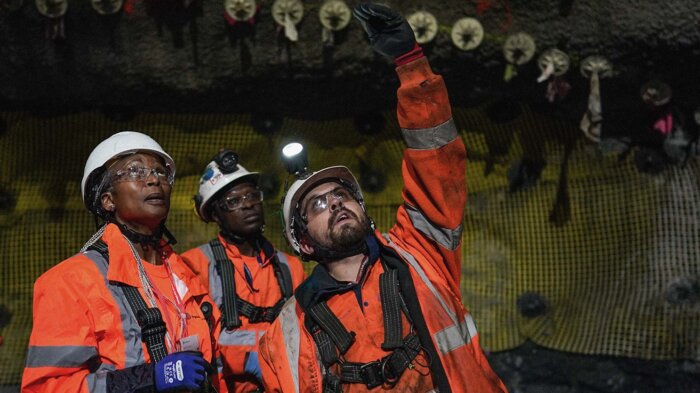
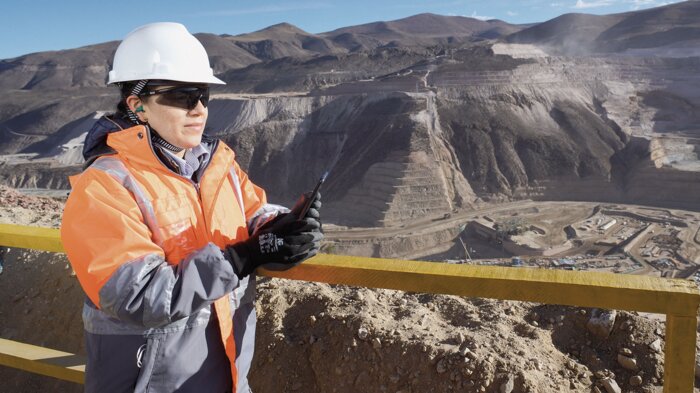
Safety Performance: Benchmarking Progress of ICMM Company Members in 2022
ICMM is committed to strengthening health and safety performance to reduce operational fatalities to zero. As part of this commitment, ICMM produces an annual safety data report.
Safety Performance: Benchmarking Progress of ICMM Company Members in 2021
ICMM is committed to strengthening health and safety performance to reduce operational fatalities to zero. As part of this commitment, ICMM produces an annual safety data report.
Safety Performance: Benchmarking Progress of ICMM Company Members in 2020
ICMM is committed to strengthening health and safety performance to reduce operational fatalities to zero. As part of this commitment ICMM produces an annual safety data report.

Safety Data: Benchmarking Progress of ICMM Company Members in 2019
ICMM is committed to strengthening health and safety performance to reduce operational fatalities to zero. As part of this commitment ICMM produces an annual safety data report.

Benchmarking Safety Data: Progress of ICMM Company Members in 2018
ICMM is committed to strengthening health and safety performance to reduce operational fatalities to zero. As part of this commitment ICMM produces an annual safety data report.

Benchmarking Safety Data: Progress of ICMM Company Members (2017)
ICMM is committed to strengthening health and safety performance to reduce operational fatalities to zero. As part of this commitment ICMM produces an annual safety data report.
Benchmarking Safety Data: Progress of ICMM Company Members (2016)
ICMM is committed to strengthening health and safety performance to reduce operational fatalities to zero. As part of this commitment ICMM produces an annual safety data report.
Benchmarking Safety Data: Progress of ICMM Company Members (2015)
ICMM is committed to strengthening health and safety performance to reduce operational fatalities to zero. As part of this commitment ICMM produces an annual safety data report.
Benchmarking Safety Data: Progress of ICMM Company Members (2014)
ICMM is committed to strengthening health and safety performance to reduce operational fatalities to zero. As part of this commitment ICMM produces an annual safety data report.
Benchmarking Safety Data: Progress of ICMM Company Members (2012-2013)
ICMM is committed to strengthening health and safety performance to reduce operational fatalities to zero. As part of this commitment ICMM produces an annual safety data report.


